
July 8, 2026
The ‘100%’ That Nonprofits Should Actually Be Chasing
Every nonprofit leader knows the promise. Many annual reports, websites and pitch decks boast a version of this line: “100% of your donation goes directly to the field.”
I get why we do it: Donors have been trained to treat overhead as a proxy for integrity, and we’ve all learned to speak this language. But the truth is that this number is meaningless. Funds are fungible, and what counts as “program expenses” versus “overhead” is usually a matter of accounting interpretation and not a reflection of what really matters.
The question that really does matter is this: Are the beneficiaries we served five years ago still thriving?
The 100% That Takes Time To Earn
Well Aware has been constructing water systems in East Africa since 2010. In that time, we’ve brought clean water to more than half a million people across 140 communities, and every single one of those communities still has reliable, clean water that belongs to them. This is our 100% promise—not a financial ratio but an outcomes record.
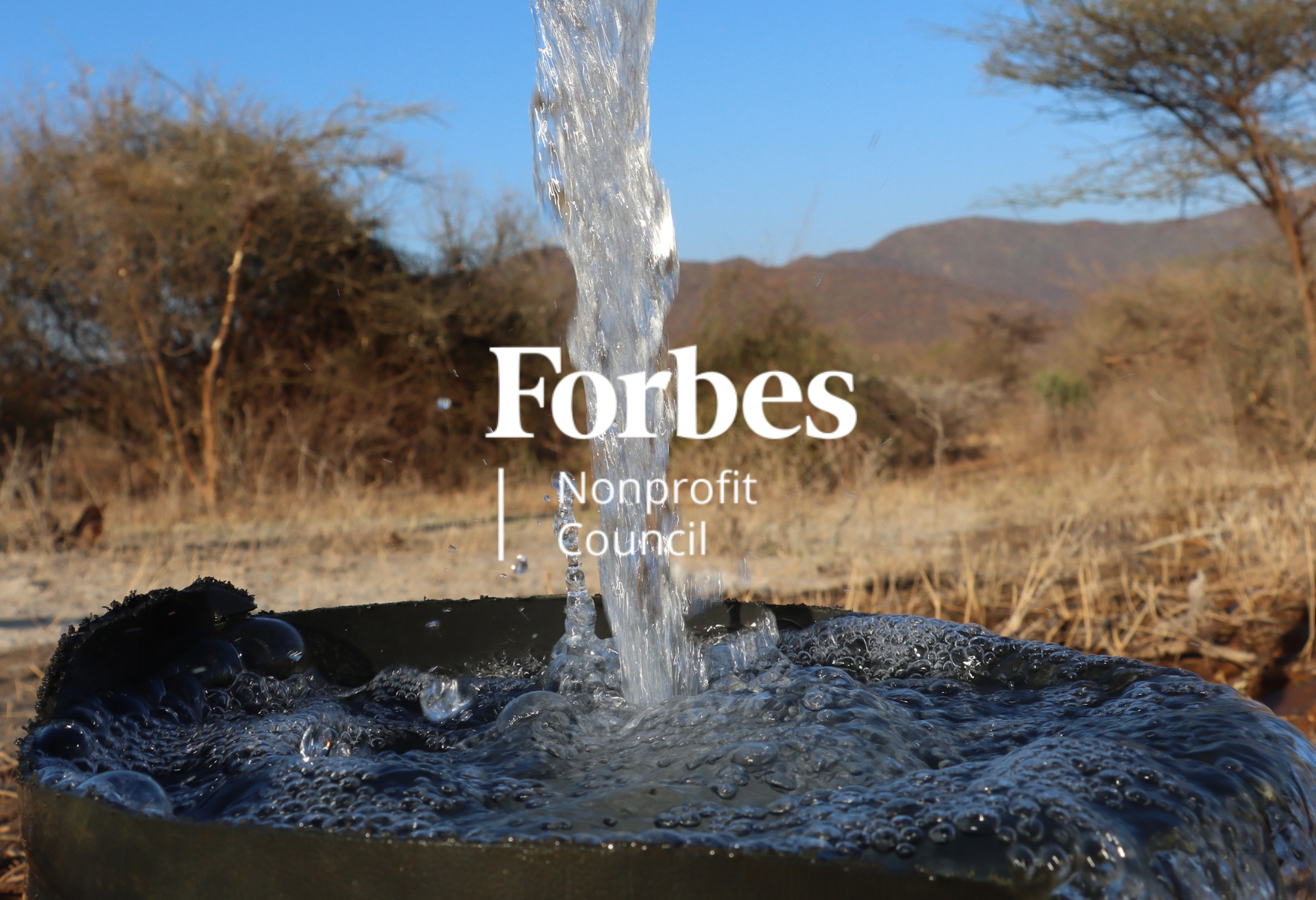
Since precision is the point, I want to be precise about what that 100% means. It does not mean that every pump and pipeline we have ever installed is still pristine. For example, in a community called Ol Moran in Kenya, we drilled a borehole in 2017. Since then, shifting groundwater and agricultural activity nearby have made the water increasingly turbid. After installing a pump sleeve the following year, it continues to malfunction. So, now, every year, we flush that borehole to keep it running smoothly so the community has a consistent and ample clean water supply that we promised at the outset.
Ol Moran still has water, and we are still there (when needed). That is what success should look like—not just a ribbon-cutting with a donor-friendly photo but an ongoing accountability to the communities we make a commitment to. It’s not glamorous, it’s not sponsored and you won’t find it in our annual report. But you will find it all over our internal communications.
What This Type Of Success Requires
The reason most organizations can’t point to an outcomes record like this is not a lack of intention. It’s a structural issue. When a funding model optimizes for donor acquisition over community outcomes, investing in results over time is expensive, and the stories are much more difficult to tell than those of a new project launch. The flushing of a borehole doesn’t land well in a gala slideshow, but installing a new water system in a new community sure does.
Our sector has collectively built an incentive structure that rewards expansion over depth. We tout financial metrics and new projects over community metrics and true needs. We tell ourselves we’re shooting for efficiency, but what we’re really seeking is convenience.
The organizations doing this work well—and there are several—have made a different choice. We have decided that our primary accountability is to the people we serve, not to the donors who fund them. That distinction may sound subtle, but in practice, it shapes everything—from how projects are designed and how success is measured to how long relationships last and whether communities are treated as partners or program recipients.
What The Other 100% Looks Like
In a place called Kelelwa, Kenya, our organization rehabilitated a colonial-era borehole and powered it with an electric pump. (We only opt for an electrical pump over a solar-powered one when a community has demonstrated a track record of managing utility payments, which is a signal of organizational capacity, not just need.) A few years after that water system was complete, something happened: The community grew. They started hiring more teachers at the school, more families were putting up permanent domiciles and school enrollment climbed. Eventually, Kelelwa saved enough from their water kiosk to replace their electric pump with a solar one. It was more powerful, more sustainable and entirely their decision.
They outgrew the original solution, and that was not a problem to solve. We realized it was, in fact, the whole point.
Community ownership has never just been a talking point for us; it was the design principle from the beginning because we understood early on that infrastructure without ownership is infrastructure with an expiration date. The communities that sustain their water systems are the ones who were partners in building them, who sit on water committees, manage maintenance funds and make decisions about how the system evolves. We supplied the resources they lacked, and they did everything else.
The Metric We Should All Be Fighting For
I don’t want to suggest that 100% long-term success is a realistic promise for every organization forever. Things happen: Governments change, communities are displaced by conflict and climate shifts alter water tables that we can’t always mitigate. Eventually, something beyond our control may disrupt what we built.
But long-term success should be our North Star. We can keep this at the center of our work by designing programs with community ownership at the center, by maintaining relationships long after the project completion report is issued and by measuring success against whether people are thriving rather than whether the dollars were deployed. These are all within our control, and it produces fundamentally different work than optimizing for a financial ratio.
The sector has spent decades teaching donors to ask the wrong question, and it’s time we gave them a better one. Instead of “What percentage of my donation goes to the field?” the question is this: “How are the communities you worked with five years ago doing today?”
If we can answer that—specifically, honestly and with pride—we have earned the only 100% worth chasing.